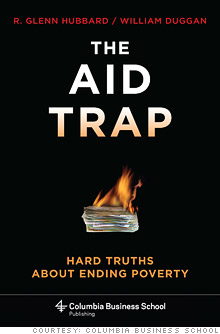
I recently read this book, which advocates for aid to be distributed on a neo-Marshall Plan model. I agree with the idea that charity, while well-intentioned, often leaves countries' economies upsidedown. Take Nicaragua, for example: The entire country's economy is dependent on NGO aid agencies. At one point nearly 23% of the GDP originated from such aid. Professionals aspire to land a job with an NGO. Therefore, there is neither incentive nor capacity to move beyond this aid. Furthermore, many NGO's revolve around unsustainable projects that require a foreign presence to maintain them, and inadequately consider input from the community. There is a general lack of understanding and empowerment in the current aid system.
However, before completely adapting to the "business model" of aid, I would need some clarifications. Where do environmental restrictions fit in? What about aid for education, etc? I think it has become clear that developing a thriving domestic business sector leads to the largest leaps of income for developing countries, but exactly how the aid system must change to cater to this need is still murky.



 Posts
Posts

